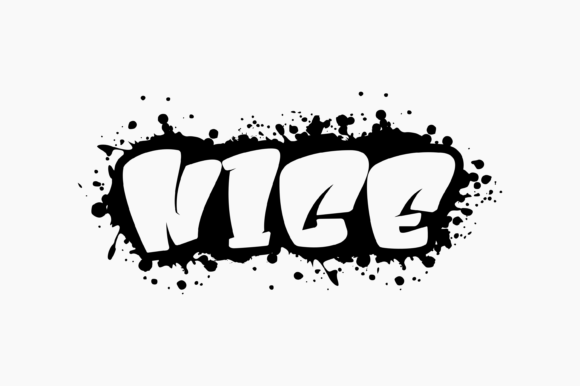
Nice Graffiti
First Impressions: A Bold Statement in Digital Form
Nice Graffiti immediately catches the eye with its edgy, urban aesthetic. The design feels raw and unpolished, which is a strong indicator of its visual personality. It’s not about precision but impact—something that speaks to street culture and artistic rebellion. As a designer, I’m drawn to this kind of energy because it translates well into real-world embroidery projects. The layout is clean yet chaotic, with bold lines and sharp angles that suggest a graffiti tag rather than a traditional graphic.
The design is built for visibility. It doesn’t rely on intricate details or fine textures; instead, it leans into simplicity and contrast. This makes it ideal for applications where the message needs to be clear at a glance. Whether it's on a t-shirt, a tote bag, or a patch, Nice Graffiti holds its own against the fabric and surrounding elements.
Real-Life Use Case: Custom Embroidered Sweatshirt for a Local Artist
I recently had the opportunity to test Nice Graffiti on a custom sweatshirt for a local artist who wanted to showcase their work through wearable art. The design was placed on the chest, slightly off-center to mimic the spontaneity of street art. The result was striking—it felt like the shirt itself was part of a mural.
One thing I noticed was how the design interacted with the fabric texture. On a cotton sweatshirt, the edges of the graffiti stood out, creating a sense of depth and movement. However, on a thinner or more textured fabric, the contrast could become less defined. This is something to consider when selecting the right fabric base for your project.
Stitch density also played a role in how the design translated. The lines are thick enough to maintain clarity even after stitching, but they don’t overwhelm the space. This balance is crucial for maintaining both visual appeal and practicality in finished products.
Where to Use Nice Graffiti Carefully
While Nice Graffiti is versatile, there are certain scenarios where it might not perform as well. For example, using it on small hoop sizes can lead to loss of detail and clarity. The design’s boldness requires a larger canvas to fully express its character.
On stretchy fabrics, the design may distort slightly, especially around the edges. This is a common issue with machine embroidery designs that aren’t specifically optimized for stretchy materials. Using a proper stabilizer can help mitigate this effect.
Dark fabrics can also present challenges. While the design has good contrast, the black background may dull some of the visual impact. Testing the design on a white or light-colored fabric first is always a good idea before committing to a final product.
Additionally, the design’s angular nature means it may not translate well to curved surfaces like caps or hats. The corners and edges could appear distorted if not carefully adjusted during the embroidery process.
Design Impact: Visual Appeal and Product Value
Nice Graffiti adds a unique edge to any embroidery project. Its raw, authentic look appeals to customers looking for something different from the usual logos and patterns. This can be a significant selling point, especially for handmade products and personalized gifts.
From a design standpoint, the use of satin stitch and fill stitch helps bring out the texture and depth of the design. These techniques ensure that the graffiti remains legible and visually engaging, even after multiple washes. This is particularly important for items like baby clothes or tea towels that see frequent use.
For Etsy sellers and small business owners, Nice Graffiti offers a great opportunity to stand out in a crowded market. Its distinctive style can help create a brand identity that resonates with customers who appreciate creativity and individuality.
Practical Design Notes for Embroidery Professionals
Before using Nice Graffiti in a real project, it’s essential to test it on scrap fabric. This allows you to assess how the design performs under actual stitching conditions. Check thread color contrast and stitch density to ensure clarity and durability.
Reviewing a black and white mockup can also reveal hidden details that might not be apparent in color. This is especially useful for identifying potential issues with small lettering or dense stitch areas.
Confirming the correct hoop size is another critical step. If the design is too large for the hoop, it can lead to uneven stitching and compromised quality. Always double-check the file specifications to avoid these pitfalls.
Finally, make sure you understand the licensing terms before using Nice Graffiti for commercial purposes. As a digital item, it’s important to know whether you can sell finished products or use it as design assets without violating any terms.
Final Thoughts: A Versatile Choice for Creative Projects
Nice Graffiti is a strong contender for designers and crafters looking for a bold, expressive design that can be adapted to various projects. Its versatility makes it suitable for everything from custom apparel to boutique branding and holiday gifts.
While it has its limitations, especially on smaller scales or textured fabrics, its overall impact and visual appeal make it a valuable addition to any embroidery toolkit. With careful planning and testing, Nice Graffiti can elevate your handmade products and help you connect with customers who appreciate creative, unique designs.